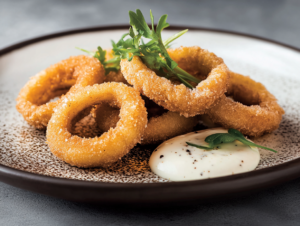
Crumbed Formed Squid Rings
Dosidicus gigas

Spain is one of Europe’s largest seafood consumers and a key import hub for the Mediterranean. According to Eurostat and EUMOFA data, the EU imported approximately 1.1 million tonnes of salmon in 2024, with Spain among the leading importing countries. With Barcelona as its European base, Holt Seafood has a closer operational presence in the market. Here is what buyers and partners should know about Spain’s role in the European seafood landscape.
The evolving situation in the Middle East has disrupted Gulf shipping routes, and carriers and logistics providers have been adjusting routings and using alternative transport solutions to maintain cargo flows. For seafood importers, the disruptions highlight the importance of supply chain flexibility, documentation resilience, and strong freight partner relationships. What the industry shift means for buyers and suppliers.
A session at Seafood Expo Global 2026 will examine how tariff policy between the EU and US is reshaping seafood sourcing economics, competitive positioning, and supplier-buyer relationships. Led by Richard Barry of the National Fisheries Institute, the panel is expected to cover how tariff structures are affecting species-level pricing and what buyers and suppliers are doing to adapt. With trade tensions continuing to influence global supply chains, the session reflects a central concern for how the industry navigates an increasingly complex commercial environment.
Seafood Expo Global returns to Barcelona from 21 to 23 April 2026, confirmed as the largest edition in its history by the event organizers. With over 80 countries represented, 52,000 square metres of exhibit space, a new Aquaculture Innovation Zone, and a conference programme of over 30 sessions, SEG26 is the most significant gathering on the global seafood calendar. Here is what to expect and how to make the most of it.